Time of personalmeanings
Architect Olena Yudina shares her thoughts on the unfading popularity of the modernist era, its origins and consequences
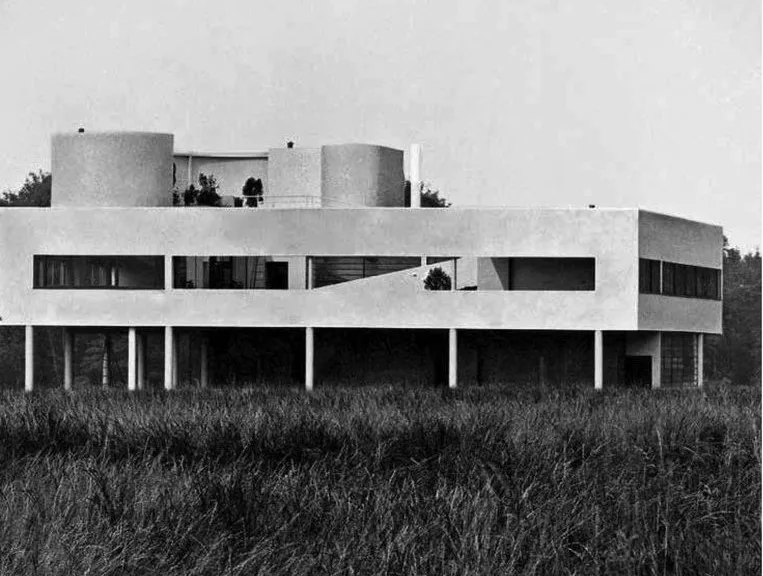
What do you link the fashion for modernism to?
I think today we want calm, quiet forms. There are so many ambitious and overwhelming objects around. In our multidimensional space architecture shouts, art shouts, advertising and other industries shout. Perhaps that is why we need soothing things. And modernist design is just that. It implies a clearer approach, not overloaded with emotion; it is honest, with no painted-over untruth. Perhaps this becomes the entry point for making contact with a world overflowing with important signals and trinket signals. This design is clear and convincing, like speech without superfluous words; it triggers the right reaction and works as a symbol of a bridge between people and an object, people and their surroundings.
Design is always a living discussion of what society lives by at the moment. This is how people explore themselves. And if you need information about the state of society, look at current design. “Design is a response to social change,” as George Nelson believed — the outstanding American designer, architect, critic, photographer, provocateur and great popularizer of modernism. He always tried to take the “lantern of modernism” and lift it higher, so as to light up more than the ground. The aesthetics of modernism resonates in us today because of similar historical preconditions and social changes.
Historical modernism is, in essence, a special way of connecting with reality, when its fabric is torn and many individual realities exist side by side. Let us remember that the movement arose as a system of adapting to a new era of discoveries and progress. Perhaps today we have a similar premonition, and it gives us the same view of things.
What tools does modernism put into the hands of a contemporary designer?
First of all, the tools of knowledge. One cannot exclude from one’s intellectual arsenal the history of product design and the formation of stylistic movements. They matter not only as the course of human thought. These vectors are needed to move freely between them, to search, to grow. And so that the designer uses this knowledge to advantage for their own discoveries rather than being burdened by it within fixed limits. What is needed is not a rigid attachment to a style, but plasticity.

Design is always a living discussion of what society lives by at the moment. This is how people explore themselves
There certainly are close parallels between designers’ work and the consumer’s heart. Designers have followed this trend for the last seven years or so. The world design scene is defined by Swedish, Finnish, Danish and even Lithuanian names of modernists. The consumer opens their space to modernist objects, and the architect carefully integrates these objects into the environment.
Everything old is in fashion. Some like antiques; Old Europe is full of beautiful “junk” that a designer strives to turn into an ultra-fashionable product. Some like everything Soviet — from worn lace to a garden bed — and some are fans of Scandinavian design. It seems everyone is tired of the coldness and rationality of minimalism, and in this situation the aesthetics of modernism is the golden mean.
Metamodernism as a response to postmodernism and a return to modernist values — does a designer feel the change of styles and philosophy?
Surely they do. In visual art, for example, we sense changes in artists’ thinking, in their approaches to work, in the way they interact with the world and search for ideas, and as a result — in self-presentation. The world is rapidly changing and renewing itself, and designers, like artists, are sensitive to such changes; they make them visible.
Designing comes easily to me; I like working with space, and ideas come naturally. For me it is a very valuable inner adventure. What I do is not tied to a particular historical era or decade. It matters more to me to reflect the heritage that formed me and to lay down a certain background. Then again, every architect has some basic convictions from which a project is born. And if you feel at ease and free in your own work and know you still have a lot to say, those convictions are unlikely to be constrained by any framework.
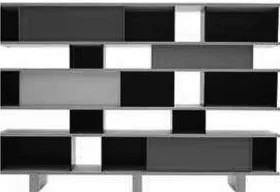
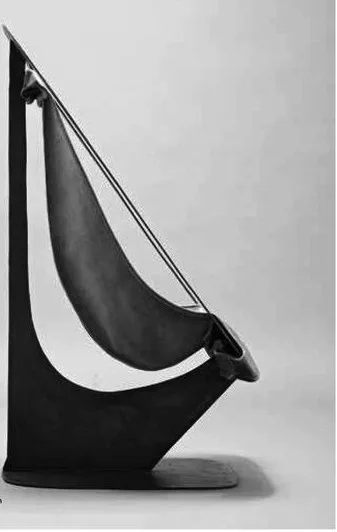
Now is the time of personal meanings, when from project to project the architect gathers disparate elements into the statement needed and puts different pieces of reality together into a harmonious whole.
But the fact is that we intuitively feel the changes. It is very hard to put into words.
What, in your opinion, awaits us after metamodernism?
In a sense everything has already been invented, and the most wonderful thing always at our disposal is imagination. A person is made of doubts and always tries to understand the life around. And it is wonderful that our thinking isn’t aimed only at basic biological tasks. The more questions we have, the more often we look for answers and invent different stories. And the designer’s job, having summed up the information, is to tell these stories in objects.
I won’t try to guess the next story in design, but I want consumption and production to become more conscious in the future. I would like “recycled” materials, that is, materials of secondary processing, to be increasingly regarded as the most advanced.
All things will improve and change accordingly. Freedom — that is what, ideally, good object design gives a person. A well-designed space or thing will make its owner happy, save them time and help them, and what it will be and in what style is not so important.
More and more often one sees people moving from one profession to another, and I am drawn to this flexibility. People from professions adjacent to design, or without special training, create beautiful things and promising concepts by engaging with design, and the very notion of “style” is quite blurred today. And we designers are chosen for our uniqueness and our ability to go beyond limits.
I believe in intuition and sensitivity in work. I would like taste itself to reflect more boldly the individual ability to see and choose, out of many things, what is truly one’s own — trusting oneself, without arrogance or pride towards others. #DIG